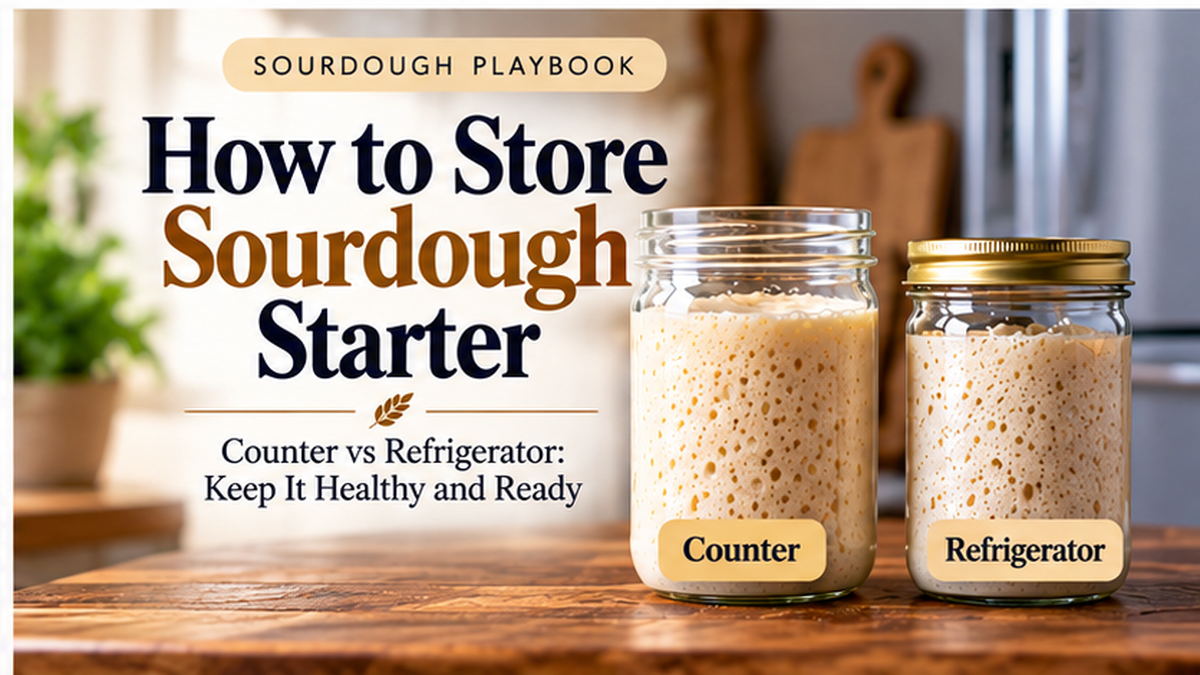
How to Store Sourdough Starter: Counter vs Refrigerator
Once your starter is healthy, you do not have to organize your life around feeding a jar of flour and water. Where you store it should match how often you actually bake.
The counter keeps a starter active and close to baking-ready, but it demands more frequent feeding. The refrigerator slows fermentation and reduces maintenance, but the starter usually needs time and feedings at room temperature before a bake.
Simple decision: bake frequently and want starter ready often? Counter storage may fit. Bake occasionally? Refrigerator storage is usually easier.
Option 1: Keep Your Starter on the Counter
Room-temperature storage keeps the starter’s microorganisms active. That is convenient if you bake multiple times a week or want to be able to build ripe starter on relatively short notice.
The tradeoff is food. An active starter consumes its available flour faster than a cold starter, so it needs regular feeding. Current maintenance methods vary from roughly once daily to twice daily depending on the method, temperature and how quickly the starter completes its rise-and-fall cycle.
For SDP, do not choose a feeding frequency because it sounds more serious. Choose a repeatable routine that keeps the starter healthy, then use the marked jar to see whether the culture is peaking and becoming hungry long before the next feeding.
A Simple Counter Routine
Keep a practical amount of established starter. Feed using your normal ratio; 1:1:1 by weight is the SDP beginner baseline. Mark the level after feeding. Keep the jar loosely covered at a comfortable room temperature. Observe when it rises, peaks and begins to fall. Adjust feeding timing or ratio deliberately if your starter repeatedly outruns your schedule.
Option 2: Keep Your Starter in the Refrigerator
Refrigeration slows fermentation enough that an established starter can go much longer between feedings. For many home bakers, this is the easiest long-term maintenance system.
A common routine is to feed an established refrigerated starter about once a week. After feeding, let it spend some time at room temperature so fermentation begins, then return it to the refrigerator.
Cold storage is maintenance mode, not peak baking mode. When you plan to make bread, take the starter out ahead of time and feed it at room temperature until it again rises strongly and predictably.
How to Put an Active Starter Into the Refrigerator
Start with an established, healthy starter rather than a brand-new culture that has not yet become reliably active.
Feed it using your normal maintenance ratio. Let it rest at room temperature long enough to begin becoming active; common guidance uses roughly 1 to 2 hours, with cooler kitchens sometimes needing longer. Cover appropriately and place it in the refrigerator.
Maintain it on a regular schedule — approximately weekly is a useful beginner baseline.
How to Wake Up a Refrigerated Starter for Baking
Take the starter out of the refrigerator, retain the amount used in your maintenance routine, and give it a normal feeding. Let it ferment at room temperature.
If it quickly returns to strong activity, great. If it is sluggish, continue room-temperature feedings until it again reliably becomes bubbly and expands strongly. Current guidance for readying a refrigerated starter uses repeated feedings until it doubles or triples within roughly 6 to 8 hours.
Plan ahead rather than assuming every refrigerated starter needs exactly one feeding. A starter fed last week and a starter forgotten for a month are not starting from the same condition.
What Is That Liquid on Top?
A neglected or refrigerated starter can develop a layer of liquid with an alcoholic smell. This can be a normal fermentation byproduct and a sign that the starter is hungry. Depending on your maintenance method, it may be stirred in or poured off before feeding.
Liquid is not the same as contamination. Visible fuzzy or colored mold, pink or orange discoloration, or a putrid spoiled odor are reasons to discard the culture rather than attempt to rescue it.
Can I Switch Between Counter and Refrigerator?
Yes. Storage is a tool, not a lifetime commitment. Keep the starter active at room temperature during a period of frequent baking, then move it to refrigerator maintenance when life gets busy.
When you move from cold storage back to frequent baking, give the culture enough room-temperature feedings to re-establish the strong predictable behavior you use as your readiness benchmark.
What If I Forget to Feed It?
Do not automatically throw away an established starter simply because a feeding was late. A neglected starter can often be revived with repeated regular feedings. The longer it has gone without fresh food, the longer recovery may take.
Safety signs still overrule optimism: mold, pink/orange contamination or a putrid odor mean start over.
Which Storage Method Should You Choose?
Choose the counter if: you bake frequently, enjoy maintaining the culture, and want starter near baking readiness.
Choose the refrigerator if: you bake weekly or less often, want to reduce routine feeding, or need sourdough to fit around the rest of your life.
Use both when life changes: because a good sourdough system should serve your schedule, not hold it hostage.
Free Tool: Sourdough Starter Quick-Reference Kit
Keep feeding ratios, the activity tracker, and the readiness check beside your jar so you can follow the routine you are actually using.
Free Tool: Sourdough Starter Quick-Reference Kit
Keep feeding ratios, the activity tracker, and the readiness check beside your jar so you can follow the routine you are actually using.
Where to Go Next
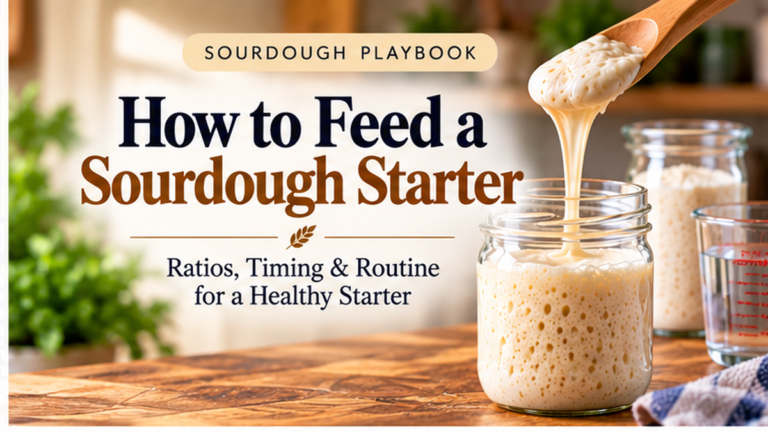
If your starter is healthy but you are unsure whether it is strong enough to bake, go to When Is Sourdough Starter Ready to Bake With? If you need to adjust the day-to-day routine, return to How to Feed a Sourdough Starter.